
C’est ce qu’affirmait la présidente de la Commission européenne le 14 juin 2022 dans un discours à l’Université Ben-Gurion du Néguev.
Sur les réseaux sociaux, le bruit court que cette information est fausse. Or le site de la Commission reprend le texte de ce discours (https://ec.europa.eu/commission/presscorner/detail/hu/speech_22_3685). On y lit : « L’Europe, ce sont les valeurs du Talmud, le sens juif de la responsabilité personnelle, de la justice et de la solidarité.« . J’ai ajouté ce (long texte) à la fin de l’article et j’y ai souligné le passage ci-dessus.

On oublie donc la philosophie gréco-romaine, on oublie la morale des évangiles ; les valeurs de l’Europe, c’est le Talmud (pas la Torah), le Talmud, un recueil du Ve siècle qui compile les enseignements et les commentaires des grands rabbins.
En quoi cette affirmation est-elle choquante ? Remontons dans le temps, revenons en 1240, à Paris.
Le procès du Talmud
Préliminaire
En 1238, Nicolas Donin, un juif converti, dénonce le Talmud auprès du pape Grégoire IX, l’accusant de contenir des propos antichrétiens. Le pape ordonne alors une enquête dans plusieurs royaumes chrétiens.
En France, le roi Louis IX (Saint-Louis) convoque une disputation (débat théologique) à Paris en 1240 entre Nicolas Donin et des rabbins juifs, dont Rabbi Yechiel de Paris.
L’accusation
L’acte d’accusation comporte 35 points :
- Le Talmud contient des blasphèmes contre Dieu.
- Il insulte Jésus-Christ. (voir l’article : Jésus dans le Talmud)
- Il nie la virginité de Marie, elle est présentée comme une femme aux mœurs légères.
- Il nie la divinité du Christ.
- Il enseigne que Jésus fut un apostat, un idolâtre et un sorcier.
- Il affirme que Jésus a été justement exécuté.
- Il accuse Jésus d’avoir été engendré de manière illégitime, il est né dans l’adultère, son père est un légionnaire romain.
- Il contient des histoires obscènes sur Marie.
- Il enseigne que les chrétiens sont idolâtres.
- Il maudit les chrétiens et leurs chefs.
- Il recommande de ne pas soigner les non-juifs.
- Il autorise à tromper les non-juifs.
- Il encourage à voler les non-juifs.
- Il autorise à tuer les non-juifs dans certaines circonstances.
- Il enseigne que les Juifs seuls sont humains, les autres étant comme des animaux.
- Il interdit aux Juifs de parler aux chrétiens de leur foi.
- Il condamne ceux qui lisent ou écoutent les Évangiles.
- Il encourage à ne pas payer ses dettes aux non-juifs.
- Il affirme que seule la loi orale (le Talmud) a de l’autorité, pas la loi écrite.
- Il ridiculise les prophètes de l’Ancien Testament.
- Il donne un rôle supérieur aux rabbins par rapport à Moïse.
- Il place les rabbins au-dessus de Dieu dans certains jugements.
- Il contient des propos obscènes et indécents.
- Il nie la résurrection des morts (dans certaines interprétations).
- Il déforme la signification des Écritures.
- Il nie que les prophéties de l’Ancien Testament concernent le Christ.
- Il affirme que le Messie n’est pas encore venu.
- Il enseigne que les chrétiens ne font pas partie du monde futur.
- Il enseigne qu’il n’y a de salut que pour les Juifs.
- Il se moque des commandements bibliques.
- Il détourne les fidèles du culte de Dieu.
- Il contient des contradictions internes.
- Il traite les lois de Dieu avec légèreté.
- Il détourne les gens de la vraie foi (le christianisme).
- En conséquence, il doit donc être interdit et détruit.
Le Talmud n’est pas un texte « inspiré », il est polémique. Il a été écrit par des perdants, des aigris : par deux fois, la révolte des Juifs a été matée par les Romains. La première se termine en 70 de notre ère par l’incendie du temple de Jérusalem ; la seconde voit la ville de Jérusalem détruite et reconstruite à la romaine. Elle s’appelle désormais Aelia Capitolina, sur les ruines du temple s’élève maintenant le temple des dieux capitolins : Jupiter, Junon et Vénus.
En plus de ces défaites politico-stratégiques, les Juifs font face à une défaite religieuse : la secte chrétienne prend de plus en plus d’ampleur jusqu’à devenir la religion de l’Empire romain.
Toute cette frustration se voit dans les textes du Talmud.
Les Juifs se considèrent comme le peuple élu, choisi par Dieu pour dominer le monde. Le Talmud les présente comme suprémacistes ; ils sont les seuls êtres humains, les goyim (non-Juifs, pluriel de goy) leur étant inférieurs, ils sont destinés à les servir et peuvent être considérés comme des animaux. Dans son discours, von der Leyen salue le sens de la solidarité et de la justice du Talmud. La solidarité ne s’applique qu’aux Juifs et la justice est à géométrie variable.
La défense
Les accusés se défendent comme ils peuvent : le Yeshu du Talmud n’est pas Jésus de Nazareth : « À la veille de la Pâque, Yeshu a été pendu. Un héraut a proclamé pendant quarante jours qu’il allait être lapidé pour avoir pratiqué la sorcellerie, séduit Israël et conduit le peuple à l’apostasie. » (Sanhédrin 43a).
Ils estiment que certains passages de Talmud sont mal interprétés :
- Il est interdit de guérir un idolâtre gratuitement (Avodah Zarah 26b) ne fait pas référence aux chrétiens.
- Il n’y ait pas d’espérance pour les minim (les hérétiques) (Berakhot 17b).
- Les textes du Talmud sont allégoriques ou juridiques, ce ne sont pas des textes religieux.
Le jugement
À la suite du débat, le Talmud est jugé hérétique et blasphématoire : en 1242, environ 24 charretées de manuscrits talmudiques (des milliers de volumes) sont brûlées sur la place publique à Paris, probablement sur la place de Grève (aujourd’hui place de l’Hôtel-de-Ville).
[NB : Ce nombre, donné par les chroniqueurs de l’époque, est exagéré : un Talmud comporte environ 2500 feuillets écrits recto-verso et à cette époque, l’imprimerie n’existe pas ! De plus, les Talmuds étaient réservés aux rabbins]
A Rome, en 1553, un immense autodafé du Talmud est ordonné par le pape Jules III.
Au XVIe siècle, en Italie, en Allemagne et en Pologne, les éditions imprimées du Talmud sont censurées par les autorités chrétiennes.
Aujourd’hui, les juifs orthodoxes, gardiens de la pensée du Talmud, affirment qu’il y a plusieurs Talmuds : l’original, le leur, de mauvaises traductions et de faux Talmuds destinés à nuire à la communauté juive.
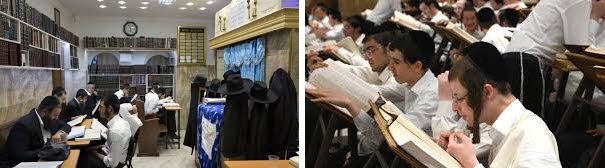
A l’origine, le Talmud était utilisé pour interpréter la Torah (la Loi) lorsqu’il y avait ambiguïté. Aujourd’hui, le Talmud est étudié pour lui-même. Dans les écoles talmudiques, des Juifs orthodoxes en ont fait leur métier et sont payés par l’État d’Israël et par des dons. Les célibataires reçoivent environ 350 EUR par mois, les hommes mariés, 700. Ceux-ci reçoivent également des allocations familiales et leur femme a généralement un travail qui leur procure un revenu.
Aux États-Unis, la rémunération est souvent plus importante, mais n’est pas attribuée par l’État.
Dans la Torah, Dieu s’adressait directement aux Hébreux, dans les autres livres, les prophètes « interprétaient » les messages de Dieu. Dans le Talmud, Dieu a disparu, ce sont les rabbins qui dictent les lois !
Alors que l’étude du Talmud était réservée aux rabbins, les écoles talmudiques sont maintenant fréquentées par des enfants.
Discours d’Ursula van der Leyen
Thank you very much, mazel tov,
President Chamovitz,
Professor Hames,
Professor Pardo,
Professor Mizrahi,
Excellencies,
Dear faculty,
Dear students,
Shalom,
I feel honoured and humbled by this recognition. The fact that the honorary doctorate comes from this prestigious institution, the Ben-Gurion University of the Negev, has a very special meaning for me. This is not only because the list of your doctors honoris causa is truly impressive – from Simone Veil, as we have seen, to Yitzhak Rabin. There is also a more personal reason for me. I am a European woman of German nationality. And not longer than 80 years ago, millions of Jewish people were murdered by Germans, in the greatest crime of all human history. We, in Germany, take historical and enduring responsibility for this inhuman disruption of civilisation. It is an indelible stain on my country’s conscience, which we must never and will never forget. So it seems like a miracle that a German like me is welcomed and honoured here, in the State of Israel, as a friend among friends, only a few generations after the Shoah.
But it is no miracle. My being here is the consequence of a choice made by the State of Israel, and by one man above all: The great David Ben-Gurion. It was he who took the first, historic step towards reconciliation with the Germans. He believed that the best way to honour the victim’s memory was to build a better future. It is also to the credit of David Ben-Gurion that my country looked the victims of our crimes in the eyes for the first time. The young German democracy grew stronger because of its developing friendship with the new State of Israel. We faced our guilt and our responsibility. And all this while the European project was taking its first steps. The very reason why the European Union was founded lies in two simple words: Never again. A new generation of Germans was raised with that premise, including myself. I can say, without reservation, that I would not be here today if it was not for David Ben-Gurion.
As long as I can think, I was convinced of two very simple facts. First, there is no Europe without European Jews. And second, Europe and Israel are bound to be friends and allies. Because the history of Europe is the history of the Jewish people. Europe is Simone Veil and Hannah Arendt. Europe is Mahler and Kafka, and Freud. Europe is the values of the Talmud, the Jewish sense of personal responsibility, of justice and of solidarity.
Today, almost 80 years after the Shoah, Jewish life in Europe is thriving again. Countries like Portugal and Austria are rediscovering their Jewish heritage. I see it in Brussels, too. As the little film showed: Just a few months ago, I had the honour to light the Chanukah Menorah in the heart of the European quarter. What an experience. And yet, European Jewish life is also embattled and endangered. Anti-Semitism has not disappeared. It still poisons our societies. And anti-Semitic attacks happen today in Europe. It is a new threat, but it is the same old evil. Every new generation must take responsibility so that the past does not return. This is why I have put the fight against anti-Semitism and fostering Jewish life in Europe at the core of the European Commission’s agenda. Our democracy flourishes if Jewish life in Europe flourishes, too. Throughout the centuries, the Jewish people have been ‘a light unto the nations’. And they shall be a light unto Europe for many centuries ahead.
We have more in common than the geography would suggest. Our shared culture and values have created a deep connection between Europe and Israel. And I am not just talking about Israel’s participation in the Eurovision Song Contest and the Champions League. The strongest bond we share is our belief in democracy and in democratic values. And here again, Ben-Gurion’s legacy is enduring. Ben-Gurion believed that Israel’s strength depends on its democratic institutions. And only in a democracy, would citizens feel compelled to take responsibility for their common home. He is so right. Thanks to this conviction, the State of Israel has flourished ever since. You have become a prosperous nation, even in the most challenging of circumstances and in a complicated region. You championed women’s rights in unlikely times, and Golda Meir’s leadership inspired women across the world. Me, as a young girl, too. Your freedom of thought has turned a small country of just a few million into a global trailblazer for science and innovation. And democracy has strengthened our special bond of friendship through the decades. Today, more than ever before, democracies like Europe and Israel should come closer together. Not because our democracies are perfect. They are not. No democracy is. Democracies offer the environment in which a diverse society can thrive. And they are challenged like never before. And we can help each other to overcome these challenges. So together, we can get one step closer to the ideals of our founding fathers and mothers.
Ladies and Gentlemen,
Today, I would like to focus briefly on three of these challenges. The first is the challenge stemming from autocracies, the second is climate change, and the third is democratic backsliding. The most direct of these challenges comes from authoritarian regimes outside our borders. And indeed, what we witness in these days, Russia’s aggression of Ukraine, is a war against democracy itself. It is a war against the idea that the people of Ukraine can take sovereign decisions about their own future. Year after year, Ukraine’s diverse and vibrant civil society has pushed for positive change and has strengthened the country’s democratic institutions. This is exactly what the Kremlin is fighting against. It could not be more symbolic that the first Russian bombs on Kyiv fell right by the gate of a Holocaust memorial and that the Russian propaganda is built on the abominable rhetoric of ‘denazification’ against a democratic Ukraine. We see with great worry the age-old threat of scapegoating the Jewish people in times of war. I know that Israel has helped Ukraine with tonnes of humanitarian aid and a field hospital, and you have welcomed tens of thousands of Ukrainian refugees to your land.
In a war against democracy, we all have a stake. And for us, Europeans, the stakes could not be higher. The Kremlin has used our dependency on Russian fossil fuels to blackmail us. And since the beginning of the war, Russia has deliberately cut off its gas supplies to Poland, to Bulgaria, to Finland, to Dutch companies, to Danish companies, in retaliation for our support to Ukraine. But the Kremlin’s behaviour only strengthened our resolve to break free of our dependency on Russian fossil fuels. For instance, we are now exploring ways to step up our energy cooperation with Israel. We have two major projects in preparation: The world’s longest and deepest underwater power cable, connecting Israel with Cyprus and Greece. This will over time be electrification from renewable energies. That is where the investment has to go into. You have an abundance of these natural resources to produce renewable energy. And the second is a gas and clean hydrogen pipeline in the Eastern Mediterranean. This is an investment in both Europe’s and Israel’s energy security. And this infrastructure will also contribute to decarbonising our energy mix. It is a great example of democracies sticking together not only in times of conflict but mostly to fight this huge enemy we have, and that is climate change. This is the big looming crisis in the background. And we have to take all our knowledge, all our engineering and entrepreneurial spirit that we have to innovate, to bring about the innovative technologies, to work to fight climate change, to make this world a better place, and to hand it over to our children with still a spring, a summer, a fall and a winter to experience.
Climate change is the great challenge that our democracies are fighting. And no one understands that better than you, here in the Negev. David Ben-Gurion believed that here in the Negev, Israel’s creativity and its pioneering spirit would be tested, as he said. He always spoke about ‘the duty to make the desert bloom’. And that is exactly what you have done ever since. And I have listened to what I was told about this university, as we can see in your School of Sustainability and Climate Change. I marvel at how you are testing new building materials that can withstand the desert heat – nature-based solutions – and how you have managed to adapt food crops to the desert climate. With the looming food crisis, we know that these will be the technologies that will make the difference whether we will master the food crisis and over time have independent production in the vulnerable countries, or not. You have with all that, quite literally, made the desert bloom. Today, the solutions that you have been researching for decades can change the life of millions across the world.
A few weeks ago, I was in Davos, where President Herzog spoke exactly about that. It was an important speech, which resonated well beyond our region. President Herzog called for a new alliance – and I quote – ‘to shape not only a new Middle East, but a renewable Middle East. A Middle East that thrives as a global hub of sustainable solutions in food, water and health, and as a source of solar energy to Europe, Asia and Africa.’ I could not agree more with his vision. For decades, Europe and Israel have cooperated closely on science and innovation. Just last December, Israel joined the EU’s massive research and innovation programme. It is called Horizon Europe and has a budget of almost EUR 100 billion. It is now time to put our cooperation at the service of the ones who need it most, and at the service of the fight against climate change.
Ladies and Gentlemen,
The third and final challenge to democracy that I would like to address is perhaps the most subtle one. This challenge is within. It is the risk of backsliding that all our democracies face. Democracy is necessarily a work in progress. It must be exercised and renewed, each and every day. Each of our democracies is different and unique. But ultimately, democracy in all its forms comes down to the same thing. As Ben-Gurion always said: ‘The outstanding attribute of democracy is not government for the people. It is government by the people.’ Democracy gives people a voice. It gives them the power to change things with their vote. In democracies, we even fight for other people’s freedom to disagree with us. The freedom to speak your mind; the freedom to change your mind. The freedom to be yourself – so that if you are different from the majority, you are always equal before the law. And this is what binds democracies together. The recognition that we are all different, yet all equal.
Today, this is challenged in many ways. Societies are becoming more fragmented. Public debate has become more polarised, and it gets harder and harder to focus on the common good. From the attacks against the rule of law and free press, and free research in some parts of Europe, to minority rights and coexistence here in the region. Democracies must have room for everyone, including those who think differently, who believe differently, or who come from a different region.
Israel is a vibrant democracy, its resilience is admired worldwide. Israeli society is incredibly diverse. For example, I was impressed to learn that over 800 students from the Bedouin community are studying here at the Ben-Gurion University. Israel is a small slice of land where people of all faiths and born on all continents live together. Families who have lived here for generations, and families who have just arrived. Diversity can be an immense strength. Yet the path towards peaceful coexistence is long. And democracy is never accomplished once and for all. This is also true for the European Union. Like other democracies, Europe faces external threats ranging from disinformation to interference in our elections; as well as challenges from within our societies, ranging from nationalism to xenophobia, from revisionism to anti-Semitism. We must strengthen our democracies and democratic way of life every single day. We must nurture our openness, and our diversity. We must defend the freedom of our media, the independence of our judges, the equality of all people before the law. Keeping democracy in good health is hard work. But it is worthwhile work. Imperfect though it might be, this is the best thing about democracy. Autocrats cannot admit mistakes. Democracies can always improve and correct. Because we, the people, can always make it better. Because we, the people, are the ultimate guardians of democracy.
Ladies and Gentlemen,
On each one of the challenges that I have addressed today, I feel my generation’s responsibility to leave you a better world than the one we inherited. But it is you – the young generation that I see here in the room –, each and every one, who will write the next chapter. It is your energy, your empathy, it is your knowledge, your tolerance, it is your hard work, your love that will shape the world and the democracies of tomorrow. And that makes me confident. Because your generation is also the most educated, the most climate-conscious and the most open-minded the world has ever seen.
Ben-Gurion said in the early days of the State of Israel: ‘Independence does not mean only liberation from a foreign yoke. Independence has a positive meaning, and that is the most important. The positive content of independence means responsibility. It is independence of the heart. And it is independence of the will.’
Long live Europe.
Am Israel Chai.
 La tradition religieuse face à l'Histoire
En parlant de Sigmund Freud, ça pourrait être intéressant de résumer son dernier livre méconnu « L’homme Moïse et la religion monothéiste » de 1939
J’aimeJ’aime